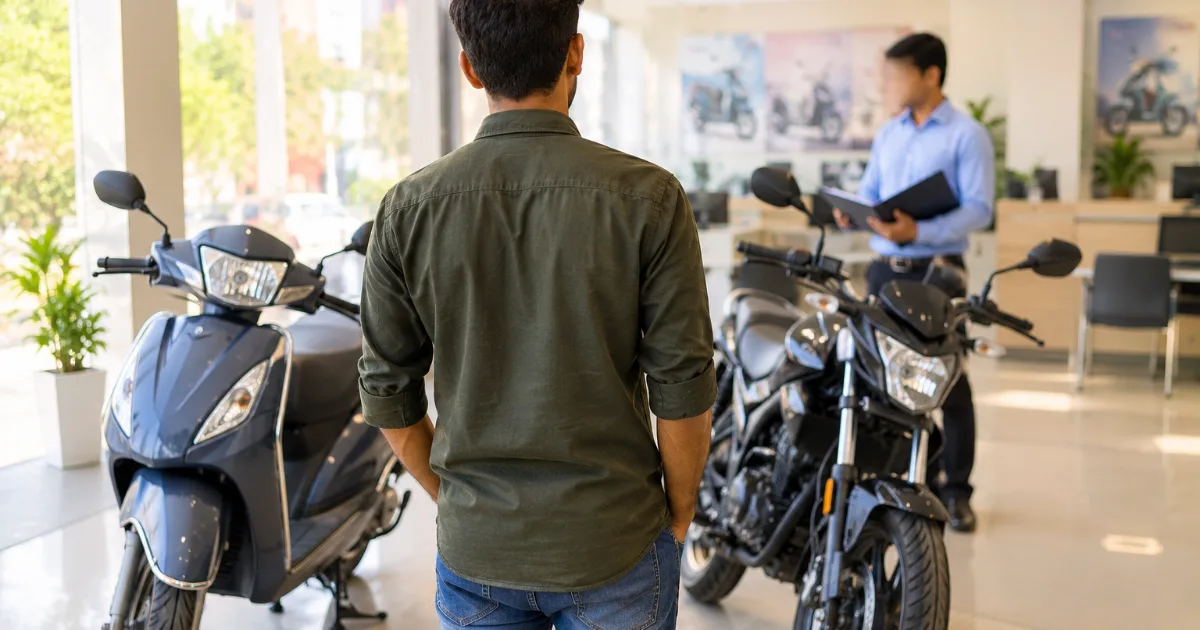
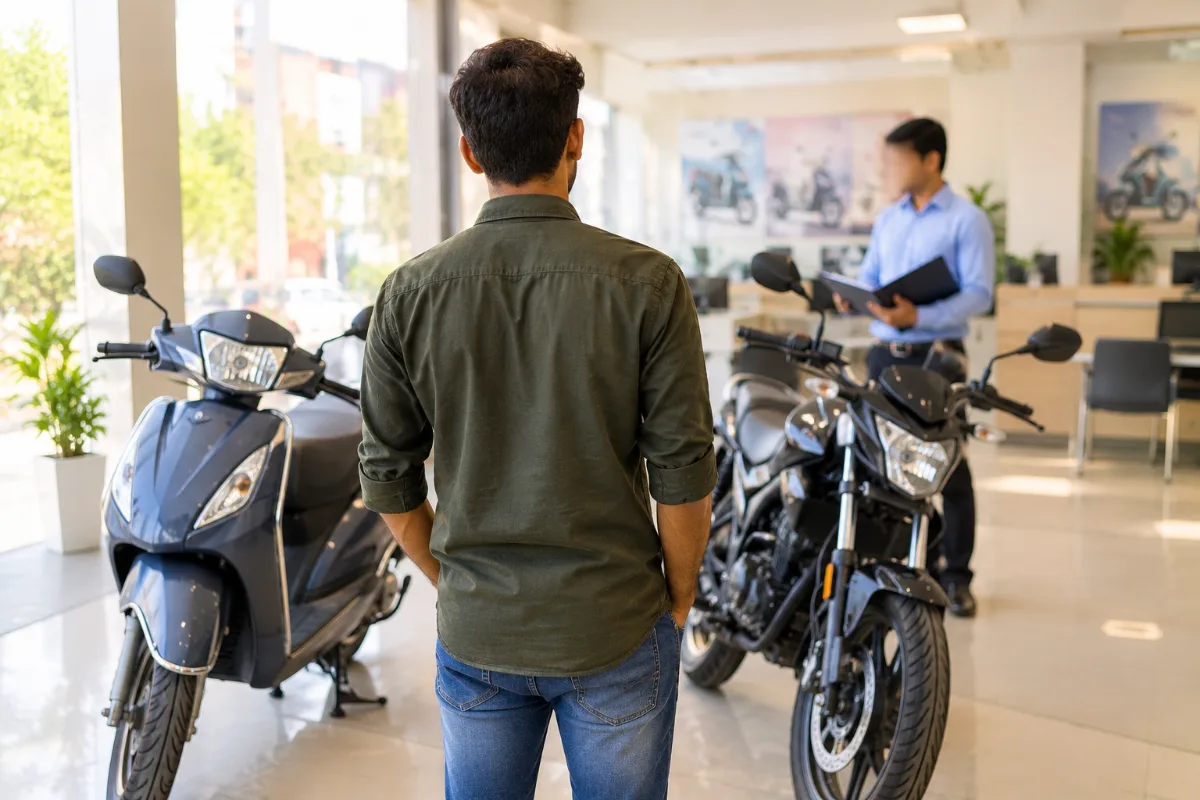
Buying your first scooter or motorcycle is exciting, and for many families in Jaipur and across Rajasthan a two-wheeler loan makes it possible without draining savings. But a first loan also starts your credit history, so it pays to understand the basics before you sign at the showroom. This two-wheeler loan guide for first-time buyers walks through eligibility, documents, down payment, EMI planning, insurance at purchase and RTO registration, so you can compare offers calmly and choose a repayment plan that fits your monthly budget.
How a Two-Wheeler Loan Works
A two-wheeler loan is a secured loan where the vehicle itself is the security. The lender pays the dealer, you pay a down payment, and you repay the balance through monthly EMIs over an agreed tenure. Until the loan is closed, the lender’s interest (hypothecation) is recorded on the vehicle’s registration certificate.
Banks, NBFCs and dealer finance desks offer these loans; rates, charges, tenure and prepayment terms differ, so compare the full cost, not only the EMI. You can explore how ATTPL Finance supports two-wheeler loan applications across lender options.
Two-Wheeler Loan Eligibility for First-Time Buyers
Each lender sets its own policy, but most look at similar points:
- Age within the lender’s permitted range at application and at loan end
- A stable source of income, salaried or self-employed
- Residence and work stability, often a minimum period at the current address or job
- Credit history, if any, along with existing EMIs and card dues
- For students or new earners, a co-applicant or guarantor may be requested
No credit history does not automatically mean rejection; lenders may rely more on income proof, down payment or a co-applicant. Salaried buyers should understand their payslip, including deductions; this guide to PF, ESI and TDS on payslips explains what those lines mean.
Documents Needed for a Two-Wheeler Loan
Keep clear self-attested copies ready to avoid back-and-forth:
- Identity proof such as Aadhaar, PAN, passport or voter ID
- Address proof, current and permanent if different
- Income proof: recent salary slips and bank statements for salaried applicants
- For self-employed applicants: income tax returns, business proof and bank statements
- Recent passport-size photographs and the dealer’s proforma invoice
Self-employed buyers, shop owners and delivery partners often find that well-maintained returns and statements make the process smoother. If your books need tidying, CA and accounting services can help you prepare ITRs and financial records lenders recognise.
Down Payment and EMI Planning
The on-road price usually includes the ex-showroom price, registration charges, road tax and insurance, and sometimes accessories or extended warranty.
A larger down payment lowers the loan amount, the EMI and the total interest paid. A longer tenure reduces the EMI but increases total interest. A simple approach:
- List your fixed monthly expenses and existing EMIs
- Keep the new EMI comfortably within what remains, with a buffer for fuel, servicing and emergencies
- Compare total repayment (EMI multiplied by months, plus charges) across two or three offers
- Read prepayment and foreclosure terms in case you want to close early
If you plan to use the vehicle for delivery or courier work, budget for higher running and maintenance costs. Businesses that hire riders for last-mile delivery services usually expect riders to keep vehicles road-worthy and documents current.
Two-Wheeler Insurance at Purchase
Third-party motor insurance is mandatory under Indian law, and the dealer usually issues a policy at the time of sale. Before accepting the default policy, understand:
- Third-party cover versus comprehensive (own damage plus third party) cover
- Policy tenure options for new two-wheelers; check the current rule with the insurer or IRDAI
- Add-ons such as zero depreciation, roadside assistance or engine protection, and whether you need them
- Personal accident cover for the owner-driver
You are generally free to compare quotes rather than accept the first one. ATTPL Finance can help you compare vehicle and other insurance options so the cover suits how you ride.
RTO Registration Basics
Every new two-wheeler must be registered with the Regional Transport Office before regular use. In most cases the dealer handles the application, and you pay registration fees and road tax as part of the on-road price. Rules and fees are set by the state, so check the current rule on the official Parivahan portal or with the Rajasthan transport department.
- Verify that your name, address, chassis number and engine number are correct on the RC
- Confirm the lender’s hypothecation is recorded, which is normal for financed vehicles
- Fit the registration plates as per current rules
- After closing the loan, collect the NOC from the lender and apply to remove hypothecation from the RC
Common Mistakes First-Time Buyers Should Avoid
- Choosing a loan only because the EMI looks small, without checking total cost
- Signing documents without reading charges, penalties and foreclosure terms
- Missing EMIs, which can affect your credit report for future loans
If you would like help comparing two-wheeler loan options, preparing documents or choosing insurance, contact ATTPL Finance and our team can guide you through the steps.
Key takeaway: Fix your budget first, compare the total cost of two or three loan offers, and check insurance and RTO paperwork before taking delivery. Paying EMIs on time on your first two-wheeler loan also helps build a healthy credit history.
Frequently Asked Questions
Can I get a two-wheeler loan without a credit history?
Often yes. Many lenders consider first-time borrowers based on income proof, bank statements, down payment and sometimes a co-applicant. Approval and terms depend on each lender’s policy.
Does the loan cover insurance and registration?
It depends on the lender. Some finance a share of the on-road price, others only the ex-showroom price. Ask for an itemised quote and confirm what the loan amount includes.
What should I do after the last EMI?
Collect the NOC and loan closure letter from the lender, then apply at the RTO to remove hypothecation from your RC and inform your insurer to update the policy.
Sources
- Reserve Bank of India
- Parivahan Sewa, Ministry of Road Transport and Highways
- Insurance Regulatory and Development Authority of India
This article is general information only and not financial, tax or legal advice. Loan and insurance terms vary by lender and insurer and can change; check current terms, rules and charges with the lender, insurer or official portal before you decide.