
Buying a car is one of the bigger purchases many families in Jaipur and Rajasthan make, and most buyers use a car loan to spread the cost. The first choice is whether to buy new or used. Both can be financed, but lenders treat them differently in eligibility, tenure, documents and checks on the vehicle itself. This guide compares new and used car loans side by side, explains what lenders look for, and lists the practical checks that protect you from surprises after you take delivery.
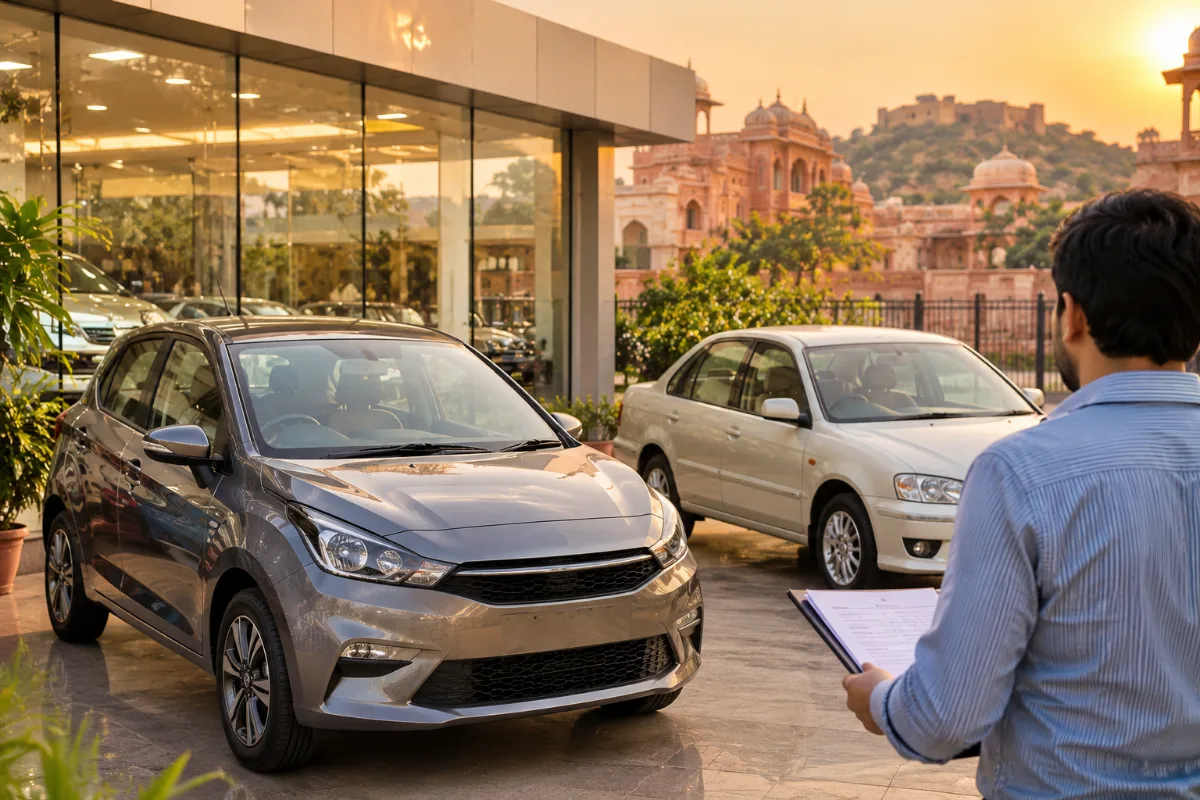
New Car Loan vs Used Car Loan: Key Differences
A new car loan is usually linked to the ex-showroom or on-road price from an authorised dealer. A used car loan is based on the lender’s valuation of the vehicle, which depends on its age, model, condition and kilometres driven.
- Tenure: used car loans often have shorter maximum tenures, because the vehicle’s age plus loan tenure is capped by the lender
- Pricing: lenders may price used car loans differently because the security depreciates and is harder to value
- Down payment: you may need a larger contribution for a used car
- Paperwork: a used car needs ownership transfer and hypothecation endorsement in the registration records
Ask each lender for its current rate, fees and tenure for your specific case instead of relying on advertised figures.
Car Loan Eligibility and Documents
Lenders assess repayment capacity, credit history and stability of income or business. Typical documents include:
- KYC: PAN, Aadhaar and address proof
- Income proof: salary slips and bank statements for salaried applicants; ITRs and bank statements for self-employed applicants
- Proforma invoice or quotation from the dealer for a new car
- For a used car: copy of the registration certificate (RC), valid insurance, PUC certificate and the seller’s details
Self-employed buyers often face questions on income. Keeping returns filed on time with CA and accounting services makes the file easier to assess.
Checks Before You Finance a Used Car
With a used car, the vehicle’s history matters as much as your profile. Before you pay any advance:
- Match chassis and engine numbers on the car with the RC
- Check whether any existing loan is noted on the RC; the seller’s lender must issue an NOC and the hypothecation must be removed
- Verify registration details on the Parivahan portal
- Review the insurance claim history and service records
- Get an independent mechanical inspection
A good inspection habit is the same one fleet owners follow. The preventive maintenance checklist for fleet owners shows the kind of points worth checking on any vehicle.
Down Payment, EMI and Total Cost of the Car Loan
Look beyond the EMI. The total cost of a car loan includes interest over the tenure, processing fees, documentation charges, and any foreclosure or part-payment charges. A longer tenure lowers the EMI but usually increases total interest.
A practical approach is to fix an EMI that leaves room for fuel, insurance, servicing and other household commitments, and then choose the tenure. Paying a higher down payment reduces the loan amount and interest outgo. Before signing, ask for the full repayment schedule and confirm whether the rate is fixed or floating, so you know exactly how the cost behaves over the years.
Motor Insurance and Registration After Purchase
Motor third-party insurance is mandatory under the Motor Vehicles Act, and lenders typically require comprehensive cover for the loan period with the lender noted in the policy. Compare cover, add-ons and deductibles rather than premium alone; you can explore motor and other insurance options with us.
For a used car, complete the RC transfer at the RTO and ensure the new hypothecation is endorsed. Keep copies of every document, including the delivery note and the seller’s NOC.
Financing Cars for Business Use
If the car is for your business, such as a taxi, a sales team vehicle or a site vehicle, the lender may assess business income and the vehicle’s commercial registration. Owners running several vehicles often add tracking for safety and usage records; this guide on GPS vehicle tracking for fleets covers the basics.
If a car is not the right fit right now, a two-wheeler loan may meet daily commuting needs at a smaller EMI.
How ATTPL Finance Can Help With Your Car Loan
ATTPL Finance can help you compare car loan options for new and used vehicles, prepare documents and understand lender terms before you sign. Sanction and pricing are decided by the lender. To get started, contact ATTPL Finance.
Key takeaway: New car loans are simpler to process, while used car loans need extra checks on the vehicle’s ownership, loan history and condition; compare total cost, not just the EMI.
Frequently Asked Questions
Can I get a loan for a car bought from a private seller?
Many lenders do finance private-party used cars, subject to valuation, RC verification and the vehicle meeting their age criteria.
Is comprehensive insurance compulsory with a car loan?
Third-party cover is mandatory by law. Most lenders also require comprehensive cover during the loan, with their interest noted on the policy.
What happens to the RC after I repay the loan?
The lender issues an NOC, and you apply at the RTO to remove the hypothecation entry from the registration certificate.
Sources
This article is general information only and is not financial, tax or legal advice. Loan terms, eligibility and charges are set by each lender and can change; please check with the lender and a qualified adviser before deciding.